
Table of Contents
- Cotton Bureau vs Once Upon A Tee: What Actually Sets Them Apart
- Cotton Bureau Review: Curation, Print Quality, and Pricing
- Once Upon A Tee Review: Selection, Fit, and Customer Experience
- The Independent Artist T-Shirt Shops Landscape in 2026
- Once Upon A Tee Alternatives Worth Exploring
- How to Judge Fabric, Print Durability, and Sizing Before You Buy
- Conclusion
- Frequently Asked Questions
Last Updated: October 12, 2026
Cotton Bureau vs Once Upon A Tee: What Actually Sets Them Apart
Choosing between Cotton Bureau vs Once Upon A Tee comes down to a single question: do you want a curated, artist-vetted catalog or an enormous print-on-demand library? Cotton Bureau is a carefully juried platform where designs are selected and printed in limited runs.
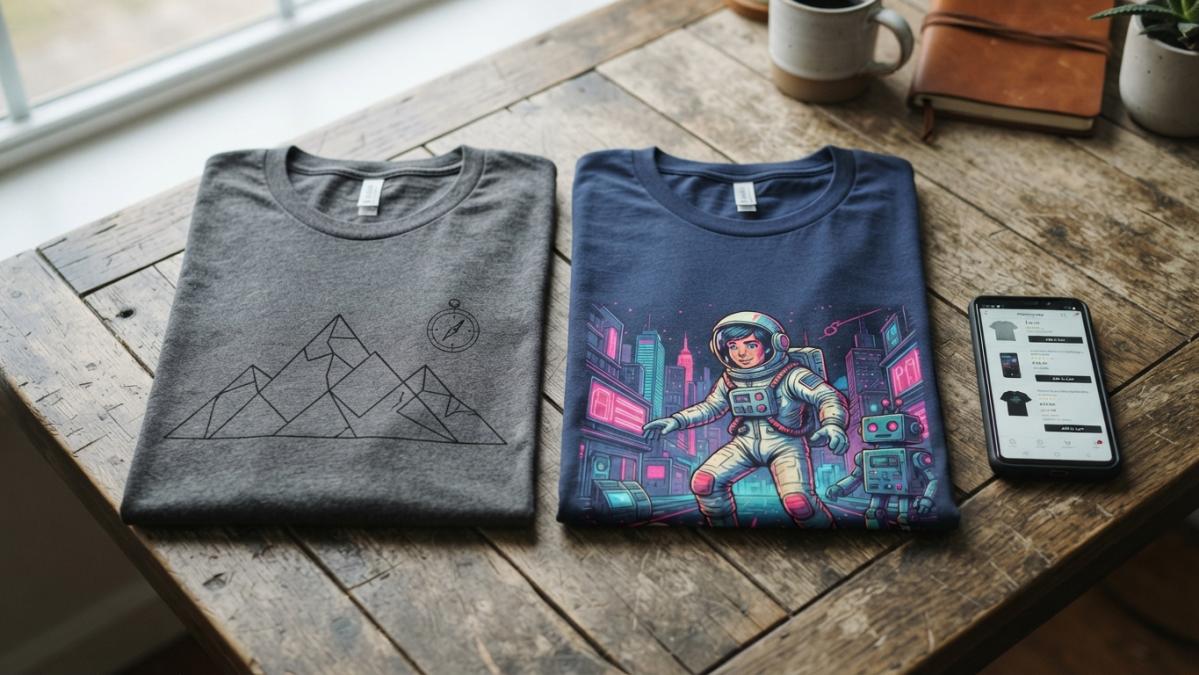
Here's the tension most buyers miss. Cotton Bureau operates as a curated marketplace, meaning artists submit work and only a fraction gets accepted for sale.
Below, we'll walk through what each platform does well, where each falls short, and the practical checks to run before you spend money on any indie tee in 2026.
Cotton Bureau Review: Curation, Print Quality, and Pricing
A Cotton Bureau review usually starts with its biggest selling point: the catalog is small on purpose. Designs are submitted by artists and reviewed before they're listed, so you're browsing a filtered selection rather than an open flood of uploads.
What Cotton Bureau Does Well
The curation is the whole product. Because fewer designs make it through, the average quality of what you see is higher. Many buyers describe the print work as clean and the blanks as soft, mid-weight cotton that holds its shape.
- Limited-run drops create genuine scarcity, so popular designs don't hang around forever
- Artist-focused model means designers are typically credited and compensated
- Consistent garment selection across the catalog, which makes sizing easier to predict
- Strong fit for shoppers who want a tee that feels intentional, not mass-produced
Where Cotton Bureau Falls Short
The flip side of curation is limited choice and slower availability. If a design sells out, it may not come back. Prices also sit above big-box basics because you're paying for the artist's work and the smaller production run.
- Smaller catalog means fewer options if you want a specific theme
- Restocks are unpredictable, so a sold-out favorite can be gone for good
- Higher per-shirt cost than a standard retail tee
- Limited size availability on some drops
Once Upon A Tee Review: Selection, Fit, and Customer Experience
An Once Upon A Tee review tends to focus on breadth. The appeal is the sheer number of designs, especially pop-culture and fandom graphics that rotate frequently. If you want a specific reference or character on a shirt, a large print-on-demand catalog is more likely to have it.
The Strengths of Once Upon A Tee
Selection is the headline. Because designs are printed to order, the catalog can carry hundreds of themes without holding inventory. That means niche references and trending topics show up fast.
- Huge, frequently updated design library
- Made-to-order printing keeps niche designs available longer
- Wide range of apparel categories, from tees to hoodies and tank tops
- Easy to find matching designs across a group or family
Drawbacks to Know Before You Buy
Print-on-demand has real trade-offs. Because each item is produced after you order, delivery takes longer than buying off a shelf, and print placement or color can vary slightly between runs. Quality control depends heavily on the specific print partner handling your order.
- Longer shipping windows than in-stock retailers
- Print size and placement can differ from the product photo
- Fabric feel varies across garment types and suppliers
- Returns are often restricted on customized or made-to-order items
The Independent Artist T-Shirt Shops Landscape in 2026
Independent artist t-shirt shops split into two broad camps in 2026: juried marketplaces and open print-on-demand platforms. Neither is objectively better. They serve different buyers.
| Factor | Curated marketplace (Cotton Bureau style) | Print-on-demand (Once Upon A Tee style) |
|---|---|---|
| Catalog size | Small, vetted | Large, open |
| Print method | Often screen printing | Usually direct-to-garment |
| Delivery speed | Faster when in stock | Slower, made to order |
| Price level | Higher per shirt | Lower to mid |
| Sizing consistency | More predictable | Varies by supplier |
| Best for | Design-led buyers | Theme and fandom buyers |
What most guides miss is that the platform matters less than the specific garment and print method behind your order. A great screen-printed tee on a heavyweight cotton blank will outlast a cheap direct-to-garment print on a thin poly blend, regardless of which shop sold it.
Once Upon A Tee Alternatives Worth Exploring
If the print-on-demand model isn't quite right, the useful move isn't to chase a different brand name, it's to match the buying model to your priorities.
Curated marketplaces. These are platforms where artists submit work and a jury decides what gets listed. Cotton Bureau is the clearest example in this comparison.
Open print-on-demand platforms. Once Upon A Tee sits here, alongside the broader category of made-to-order shops.
Artist-direct shops. Some designers sell straight from their own storefronts or through small independent sites.
Small-batch apparel brands. These sit between curation and print-on-demand. They print in limited runs, lean on heavier cotton, and often publish garment weights and measurements.
General lifestyle stores. Some shops mix apparel with other goods, pet accessories, home items, electronics, so a single order covers more than a shirt. Molina Faith and Friends fits here: unisex tees and sweatshirts alongside pet accessories and home electronics, so one order can handle a family outfit and a few practical extras.
A practical way to choose: write down your top two priorities before you browse. If they are "specific design" and "lowest price," an open print-on-demand platform fits.
How to Judge Fabric, Print Durability, and Sizing Before You Buy
Most guides tell you to "check the size chart" and "wash cold." That's not enough to choose between Cotton Bureau and Once Upon A Tee. What actually separates them, and what the top results rarely put side by side, is how each model handles fabric specs, print method, sizing consistency, shipping, returns, and review evidence. Here's a structured way to judge both before you spend money.
Fabric and garment weight
Look for the actual composition and weight, not just "100% cotton." A 4.5 oz tee and a 6.5 oz tee behave differently after ten washes. Heavier cotton holds shape and drapes better; lighter cotton feels cooler but shows wear faster. In a curated model like Cotton Bureau, the blank is usually chosen once and used across many designs, so what you read is what you get. In a print-on-demand model like Once Upon A Tee, the blank can change by product type or fulfillment partner, so the same design in a tee and a hoodie may not share fabric. Check the product page for composition and, if listed, garment weight.
Print method and durability
Screen printing generally outlasts direct-to-garment (DTG) printing, especially on dark fabrics, because the ink sits on top of the fabric rather than bonding into it. Curated shops often screen print because they produce in batches. Print-on-demand shops usually use DTG because each item is made after you order. Neither is automatically bad, a well-executed DTG print on a high-cotton blank can last years, but the method affects how the print feels, how it stretches, and how it fades. Ask how the print is applied and whether the shop uses plastisol or water-based ink. Water-based ink tends to feel softer and fade more gradually; plastisol tends to be more opaque and slightly heavier.
Sizing and fit
Always read the size chart, not the label. Unisex cuts run boxier than women's fits, and a "medium" from one supplier can measure like a "large" from another. The practical method: measure a shirt you already own that fits well, chest, body length, sleeve length, and compare those numbers to the chart. Cotton can shrink slightly after the first wash, so account for roughly a small percentage of shrinkage on 100% cotton. In a curated model, sizing is more predictable because the blank is consistent across the catalog. In a print-on-demand model, sizing can vary by garment type and supplier, so check the chart for the specific item, not the shop as a whole.
Shipping, returns, and customer service
This is where the two models diverge most, and where the SERP is thinnest. Curated shops often ship faster when an item is in stock because it's already printed, but limited runs mean a sold-out design may not restock. Print-on-demand shops take longer because each item is produced after you order, and returns are often restricted on made-to-order or customized items. Before you buy, find three things on the policy page: the production window, the return window, and whether return shipping is covered. If a shop doesn't state these clearly, treat that as a signal.
Review evidence and methodology
A 4.8-star average means little without context. Look at the number of reviews, the dates, and whether they cluster around a specific product or the shop overall. A common pattern is that positive reviews mention design selection and negative reviews mention fit or delivery time, which tells you the risk is in sizing and logistics, not the artwork. Reconcile the two: if a shop has hundreds of recent reviews with recurring fit complaints, size up or buy one item first. If reviews are sparse or old, treat them as anecdotal rather than representative.
A quick decision rule: if fit consistency and print longevity matter most, favor the curated model and verify the blank and print method. If design selection and niche themes matter most, favor the print-on-demand model and verify the specific item's size chart and return policy. Either way, the garment and print method behind your order matter more than the platform name on the receipt.
Conclusion
The real challenge with indie apparel is that quality varies far more than it does at a big-box store, and a single bad order can sour you on the whole category. Molina Faith and Friends offers unisex tees and sweatshirts made from soft, durable cotton and cut for a flattering fit across body types. Our Team Guapo and Guapo & Pappi designs are made for everyday wear and family coordination, and our broader range of pet accessories and home electronics means one order handles more than just the shirts.
Choose Molina Faith and Friends for comfortable, crowd-favorite apparel you'll actually reach for every week.
Frequently Asked Questions
What is the difference between Cotton Bureau and Once Upon A Tee?
Cotton Bureau focuses on limited-edition, curated designs from a smaller roster of artists, often with premium garment blanks and higher price points. Once Upon A Tee leans toward a larger catalog of pop-culture and fan-inspired graphics, with frequent drops and a wider range of price tiers. Both operate as independent artist t-shirt shops, so the real difference comes down to design taste, garment weight, and how each handles sizing and returns.
Which has a better selection of independent artist designs?
It depends on what you want. Cotton Bureau's catalog is smaller but more tightly curated, which suits buyers who prefer fewer, higher-quality drops. Once Upon A Tee carries a broader mix of pop-culture themes and limited-edition designs, so you will find more variety but also more variance in print quality and fabric from one drop to the next. Check the size chart and garment weight on each listing before ordering.
How do shipping and returns compare between Cotton Bureau and Once Upon A Tee?
Both shops ship from the United States and typically process orders within a few business days, though made-to-order items can take longer. Return windows and policies differ, and limited-edition drops are often final sale, so read the policy on each product page before you commit. If you are unsure about fit, order one size up rather than assuming a return will be simple, especially on limited runs.
What are some alternatives to Cotton Bureau and Once Upon A Tee?
If you want an option with unisex fits and soft cotton construction, Molina Faith and Friends is worth a look, particularly for coordinated family apparel and casual everyday wear. Other routes include artist-run shops on marketplaces like Etsy, brand-owned stores from illustrators you already follow, and print-on-demand platforms where you upload your own design. Each has trade-offs in print method, garment quality, and turnaround time.