
Table of Contents
- Why Accurate Measurements Matter for Your Shirt Size
- What You'll Need Before You Start Measuring
- How to Measure Chest Size for a Shirt
- How to Measure Sleeve Length for a Shirt
- How to Measure a Shirt You Already Own
- Understanding Shirt Size Chart Measurements
- Common Measuring Mistakes and How to Avoid Them
- Conclusion: Finding Your Perfect Fit
- Frequently Asked Questions
Last Updated: October 12, 2026
Why Accurate Measurements Matter for Your Shirt Size
Getting the right fit starts with knowing how to measure shirt size accurately. A tape measure and five minutes solve a problem that online shopping has made worse: you cannot try before you buy.
Here is the core tension. Shirt labels lie. A "Large" from one maker fits like a Medium from another. Chest measurements, sleeve length, and shoulder width all shift between brands, styles, and even fabric types. The only reliable method is to measure your body or a shirt you already love, then compare those numbers to the seller's size chart. This guide from Molina Faith and Friends walks through every measurement, step by step, plus the mistakes that throw numbers off by whole sizes.
At Molina Faith and Friends, we sell unisex tees and sweatshirts, so we hear the same question constantly: "What size am I, really?" Below, we show you exactly how to find out.

What You'll Need Before You Start Measuring
The right tools make this fast. You need three things, and none of them cost much.
- A flexible measuring tape. The soft kind used for sewing. A stiff builder's tape will not wrap around your chest or arm.
- A mirror or a helper. Measuring your own back and shoulders is awkward. A second person makes it easier.
- A shirt that fits you well. This is your reference garment.
Wear a fitted t-shirt or a thin shirt while you measure. Chunky sweatshirts add bulk and inflate your numbers. Stand naturally with a relaxed posture and your arms at your sides. Do not puff out your chest or suck in your stomach. You want real numbers, not aspirational ones.
How to Measure Chest Size for a Shirt
To measure chest size for a shirt, wrap the tape around the fullest part of your chest, just under your armpits. Keep the tape level all the way around and snug, not tight. This number is your chest circumference.
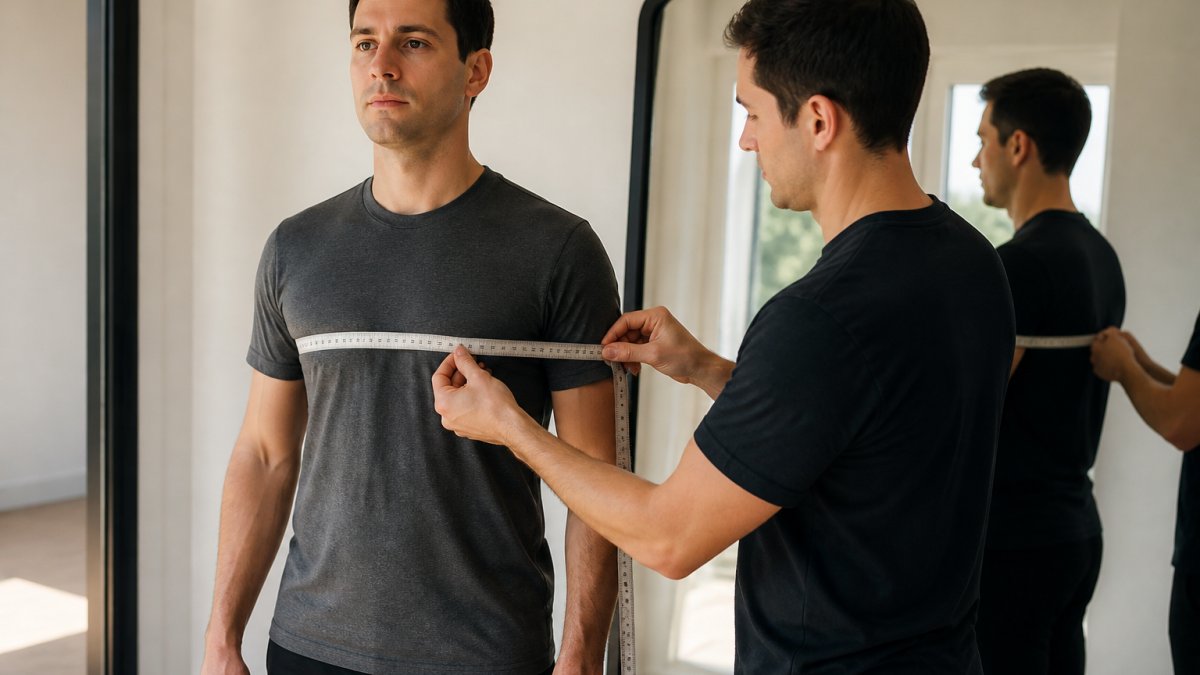
Step-by-Step Chest Measurement
- Stand up straight with your arms relaxed at your sides.
- Find the fullest part of your chest, usually right across the nipples.
- Wrap the tape around your back and bring both ends to the front.
- Keep the tape level, not dipping at the back.
- Breathe out normally and read the number where the tape meets.
- Repeat the measurement once to confirm it.
For reference, the CDC national health statistics on body measurements publish average chest and waist figures for adults, which can help you sanity-check your numbers.
How to Measure Sleeve Length for a Shirt
Sleeve length runs from the center back of your neck, across your shoulder, and down to your wrist. This is the standard method most size charts use. It captures shoulder slope and arm length in one number.
Step-by-Step Sleeve Measurement
- Find the bone at the base of your neck, at the center back.
- Place the tape there and run it over the top of your shoulder.
- Continue down the outside of your slightly bent arm.
- Stop at the wrist bone, right where a cuff would sit.
- Keep the tape snug against your arm, not floating.
- Write the number down before you move.
A slightly bent arm gives a more honest reading than a locked-straight one. If you measure with a rigid arm, the sleeve will feel short every time you reach for something.
How to Measure a Shirt You Already Own
Measuring a shirt you already own is often easier and more accurate than measuring your body. It removes guesswork about ease and how you like a shirt to drape.
Button the shirt and lay it flat on a table or bed. Smooth out the wrinkles. Then measure across, not around:
- Chest: Measure flat from one armpit seam to the other, then double it.
- Shoulder width: Measure straight across the back from one shoulder seam to the other.
- Sleeve length: Measure from the shoulder seam down the outside of the sleeve to the cuff.
- Shirt length: Measure from the highest point of the shoulder, near the collar, straight down to the bottom hem.
- Neck: Button the collar, lay it flat, and measure inside from the center of the button to the far edge of the buttonhole.
Write every number down. Compare those figures directly to the seller's size chart. This is the fastest path to a shirt that fits like your favorite one.
Understanding Shirt Size Chart Measurements
A shirt size chart is a table of garment measurements, not body measurements. That single distinction causes more returns than any other issue. But reading the chart is only half the job, you also need to know how cut, fabric, and shrinkage change what those numbers mean on your body.
Built by Faith Not Fear — Unisex T-Shirt →
How Fit Style Changes the Numbers
Slim, regular, and relaxed cuts use the same chest measurement differently. A slim-fit shirt may list a 40-inch chest but sit close to the body with minimal ease. A relaxed-fit shirt with the same 40-inch chest measurement leaves several inches of room for layering. If you normally wear a regular fit and switch to slim, you may need to size up even though the chart number looks identical.
How Fabric and Shrinkage Affect Size Choice
Fabric behavior matters as much as the chart. Cotton tees commonly shrink about 2-5% in length after the first few washes unless they are pre-shrunk. A 28-inch shirt length can lose roughly half an inch to an inch and a half. Stretch fabrics, cotton blends with elastane, for example, forgive a snug fit because they move with you. Stiff woven cotton does not. If you plan to layer a shirt over a tee, add an inch or two of ease to your chest number before comparing.
How to Choose a Size When You're Between Sizes
When your measurements fall between two sizes, use these decision rules:
- Size up if you want a relaxed fit, plan to layer, or the fabric has little stretch.
- Size down if you want a close fit and the fabric has stretch or the cut runs generous.
- Check the chart's method, body or garment, before you decide. A chart listing garment measurements already includes ease; a body-measurement chart does not.
- Account for shrinkage if the shirt is not pre-shrunk. A shirt that fits perfectly out of the bag may be snug after three washes.
Common Measuring Mistakes and How to Avoid Them
The biggest mistake is measuring over bulky clothing. A thick hoodie adds centimeters that send you a full size up. Measure over a thin layer instead.
Other errors we see often:
- A loose tape. A sagging tape reads small. Keep it snug against the body or fabric.
- A tilted tape. A tape that dips at the back inflates your chest number. Keep it level.
- Measuring once. Bodies shift. Measure twice and average the two.
- Mixing units. Charts use inches or centimeters. Convert before you compare. One inch equals 2.54 centimeters.
- Ignoring tolerance. Most charts allow a small margin of error, often around a centimeter. If you sit right on a boundary, that margin decides your size.
For a deeper look at how garments are sized and graded, the ASTM international standards for apparel sizing outline the systems manufacturers use.
Conclusion: Finding Your Perfect Fit
Fit problems rarely come from bad luck. They come from skipped steps: guessing a size, measuring over thick clothes, or comparing your body numbers to garment numbers. Do the five measurements once, write them down, and keep them on your phone. Every future order gets easier.
At Molina Faith and Friends, we built our unisex tees to make that easy. Each one is made from soft, lightweight combed and ring-spun cotton with a flattering cut and pre-shrunk fabric, so the size you order is the size you keep. Our FTC guidance on textile and apparel labeling compliant listings keep sizing clear, and our unisex fit suits a range of body types.
Ready to find your size? Choose from our collection, match your measurements to the chart, and wear something that fits right the first time.
Frequently Asked Questions
Should I measure my body or a shirt that fits?
Both methods work, but they serve different purposes. Measuring your body gives you your true size for custom or made-to-order shirts. Measuring a shirt you already own helps you compare against a brand's garment measurements, which is useful when shopping online. For the best results, take your body measurements first, then compare them to the size chart of the shirt you want to buy.
How do I measure my shirt size accurately at home?
Use a flexible measuring tape and wear a fitted t-shirt. Stand naturally with arms at your sides. Measure your chest at the fullest point, your neck at the base, and your sleeve from shoulder seam to wrist. Write each measurement down and repeat it once to confirm accuracy. Having a friend help with shoulder and sleeve measurements reduces errors significantly.
Is a size 32 a medium or large?
A size 32 typically refers to sleeve length in men's dress shirts, not overall shirt size. In that system, the first number is neck circumference and the second is sleeve length. For example, 17/32/33 means a 17-inch neck with a 32-33 inch sleeve. Always check the specific brand's size chart because numbering systems vary between casual and dress shirts.
How do I measure a shirt I already own?
Button the shirt and lay it flat on a table. Measure across the chest from one armpit seam to the other and double that number. Measure from the center back of the neck to the bottom hem for shirt length. For sleeve length, measure from the shoulder seam to the cuff edge. Compare these garment measurements directly to the size chart of the shirt you're considering.
Choosing the right size should not feel like a gamble. At Molina Faith and Friends, our unisex t-shirts use soft, lightweight cotton with a flattering cut and pre-shrunk fabric, so your measurements translate into a fit you can trust. Pick your favorite design, check the chart, and order with confidence. Get started with Molina Faith and Friends and choose a shirt that fits the way you want.