
Table of Contents
- Why Unisex Shirts Fit Differently: The Core Differences
- Unisex vs Men's T-Shirt Fit: What Actually Changes
- How to Measure Shirt Size Accurately for Unisex Fit
- Using a Unisex T-Shirt Size Chart to Find Your Fit
- Should I Size Down in Unisex Shirts? What the Data Shows
- Fabric, Shrinkage, and How Unisex Shirts Hold Up
- Common Fit Issues and How to Solve Them
- Frequently Asked Questions
Last Updated: October 19, 2026
Why Unisex Shirts Fit Differently: The Core Differences
Unisex apparel fit can feel unpredictable: a medium may feel roomy in the chest but tight at the shoulders. That's by design.
The reason is pattern construction. Unisex shirts use a single body block serving multiple frame types, creating predictable trade-offs: roomier proportions in some areas, different shaping in others. Understanding these differences turns sizing from guesswork into measurement.
The Men's Body Block Foundation
Most unisex t-shirts start with a men's sizing block: shoulder width, chest circumference, and sleeve proportions mirror traditional men's cuts rather than splitting the difference between men's and women's measurements.
Why men's? Production simplicity. A single proven block reduces grading and manufacturing complexity, and brands can source from factories specializing in men's construction.
This foundation shapes everything downstream: shoulder seams sit wider than a women's cut, the chest has more room, and the silhouette is straighter, not tapered.
Straight Cut vs. Shaped Waist
The most visible difference is waist shaping. Women's cuts include a narrower waist and curves through the torso; unisex shirts omit this taper entirely.
The straight cut accommodates a wider range of body shapes without multiple pattern variations: curvier frames get more room through the torso, straighter builds get a close fit, and neither needs a custom pattern.
The trade-off: if you prefer a fitted, tapered silhouette, unisex sizing won't deliver it. But for comfort and a relaxed fit across different proportions, the straight cut is the feature, not the bug.
Unisex vs Men's T-Shirt Fit: What Actually Changes
The difference between a unisex shirt and a traditional men's shirt is often smaller than expected. Both typically start from the same body block; the real distinction is how brands grade sizes and communicate fit.

A men's shirt is marketed toward men's sizing expectations. A unisex shirt carries the same construction but is marketed as working for multiple body types, signaling the brand has tested the fit across different frames.
Shoulder Width and Sleeve Shape
Shoulder width is where frame differences become most apparent. Unisex shirts typically have wider shoulders than women's cuts but may be narrower than traditional men's cuts, depending on the brand's grading.
Sleeve shape varies too.
Sleeve length matters most here. Coming from a women's cut, you might need to size down in sleeve length even if the chest fits right.
Chest, Waist, and Body Length
Chest circumference in unisex shirts is typically larger than equivalent women's sizes but comparable to men's: a unisex medium might measure 20-22 inches of chest width, while a women's medium runs 17-19 inches.
Waist is where unisex truly diverges. With no inward taper, waist circumference is nearly identical to the chest; in women's cuts the waist is often 2-4 inches smaller.
Body length in unisex shirts falls between women's and men's lengths: longer than most women's cuts but possibly shorter than a traditional men's cut, especially in smaller sizes.
How to Measure Shirt Size Accurately for Unisex Fit
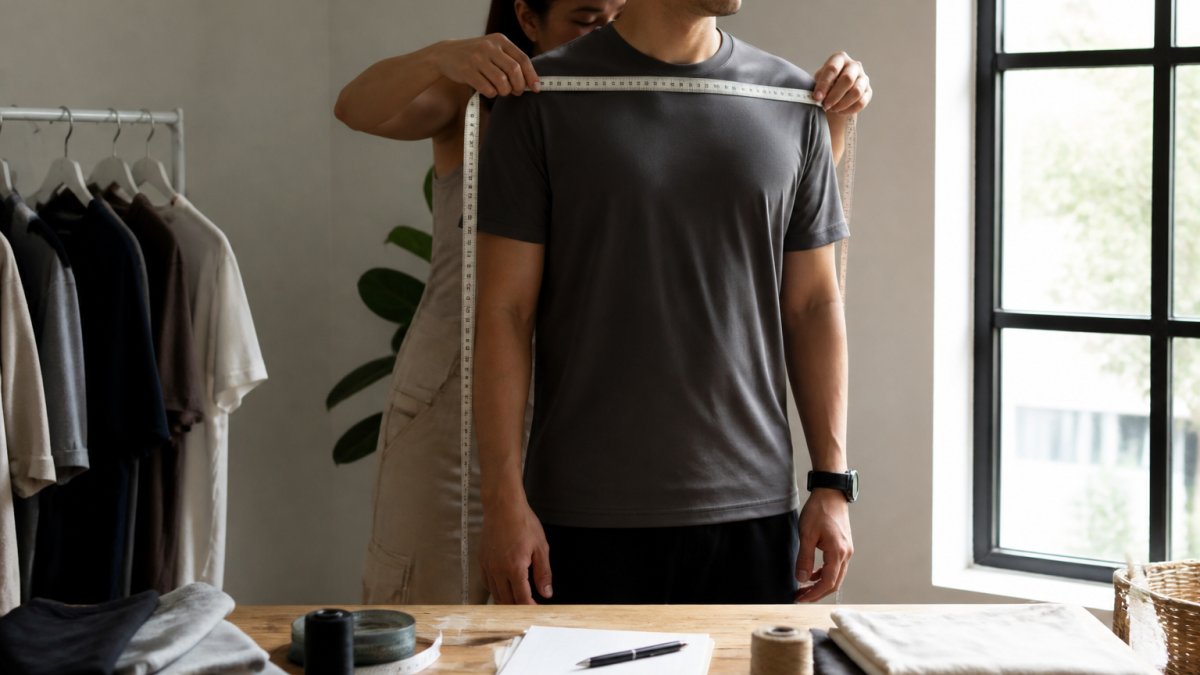
Getting the right size starts with three key measurements. You don't need special tools, a soft measuring tape and a well-fitting shirt you already own are enough.
Key Measurements You Need
Shoulder-to-shoulder width comes first. Lay a well-fitting shirt flat and measure from the top of one shoulder seam to the other. This tells you the shoulder width you're comfortable with.
Chest circumference comes next. Measure around the fullest part of your chest with the tape parallel to the ground, without pulling tight. This number compares directly to unisex size charts.
Body length is third.
Optional but useful: measure sleeve length from the center back neck down through the shoulder and to your wrist.
Comparing Your Measurements to Size Charts
Once you have these measurements, compare them to the unisex size chart. Most quality brands publish detailed measurements for each size.
Look for charts listing chest circumference, shoulder width, and body length.
Place your measurements alongside the chart. If your chest is 40 inches and a large shows 41-43 inches, that's your size.
Vanity sizing exists in unisex apparel too: one brand's medium may differ noticeably from another's. Always check actual measurements, not just the label size.
| Measurement | What to Measure | Why It Matters |
|---|---|---|
| Shoulder width | Seam to seam across the back | Determines if sleeves sit right |
| Chest circumference | Around fullest part of chest | Primary fit indicator |
| Body length | Neck base to desired hem point | Prevents too-long or too-short shirts |
| Sleeve length | Center back neck to wrist | Ensures sleeves hit at correct point |
Using a Unisex T-Shirt Size Chart to Find Your Fit
A good unisex size chart is your most reliable tool. But not all charts are created equal.
The best charts show measurements for each size in both inches and centimeters. They list chest, shoulder, sleeve length, and body length.
Start with the measurement you're most confident about.
If your measurements straddle two sizes, read the product description. Does it mention a relaxed or fitted cut?
Built by Faith Not Fear — Unisex T-Shirt →
Our Team Guapo and other unisex lines at Molina Faith and Friends are designed with consistent grading, so the measurements are reliable.

Should I Size Down in Unisex Shirts? What the Data Shows
This is the question we hear most often. The answer depends on your body frame and fit preference, there's no universal rule.
Sizing down can work if you're used to women's sizing and the unisex shirt's proportions feel too roomy. But sizing down indiscriminately often creates new problems: too-short sleeves, shoulders that don't align with your shoulder width, or a shirt that's too short overall.
When Sizing Down Makes Sense
Size down if your measurements fall closer to the lower end of a size range and you prefer a closer fit.
Size down if you're concerned about length. Unisex shirts often run longer than women's cuts.
Don't size down based on assumptions about "how unisex shirts usually fit." Size down based on your actual measurements and the specific size chart you're looking at.
Body Shape and Proportions Matter More Than Gender
Here's the insight most guides miss: your body shape determines fit more than your gender does. A person with a straighter build often finds unisex sizing works perfectly.
If you have broader shoulders, unisex sizing usually accommodates that better than women's cuts. If you prefer a tapered waist, you might find unisex sizing frustrating regardless of your gender.
The key is matching your actual proportions to the measurements, not to assumptions about what "unisex" should mean for your body.
Fabric, Shrinkage, and How Unisex Shirts Hold Up
Fit doesn't end with sizing, fabric quality and construction determine how a shirt holds up over time.
Pre-shrunk fabric is standard for quality unisex shirts.
Side-seamed construction adds durability and maintains shape better than single-needle seams. Shoulder-to-shoulder taping reinforces the neckline and prevents stretching.
Fabric weight also influences how a shirt drapes and feels. A 4.2-ounce fabric is lightweight and breathable, comfortable for everyday wear.
The slight sheen and softness of combed cotton comes from how the fibers are processed before spinning.
Common Fit Issues and How to Solve Them
Even with the right size, unisex fit can feel off if you're used to gendered cuts. Here's how to troubleshoot the most common complaints.
Too Boxy or Loose Through the Chest
If the shirt feels like a tent through the chest, you have two options: size down or reconsider whether unisex sizing matches your aesthetic preference.
Sizing down is worth trying if your measurements suggest it. A size small instead of medium might give you the fit you want without sacrificing shoulder or sleeve fit.
If sizing down creates other problems, sleeves too short, shirt too short, then the issue isn't sizing. It's that you prefer a fitted, tapered silhouette.
Sleeves Too Long or Shoulders Too Wide
Long sleeves often mean the overall shirt is sized too large. Check your shoulder measurement against the size chart. If your shoulders are narrower than the shirt's shoulder width, sizing down is your fix.
Shoulders that feel too wide usually indicate the same issue: you're in a size that's too large for your frame.
If sizing down solves the shoulder issue but creates chest problems, you're between sizes. In this case, choose based on priority. If shoulder fit and sleeve length matter most, size down.
Shirt Length Hitting at the Wrong Spot
If a shirt is too long, you have limited options. Tailoring can shorten the hem, but that's an added cost.
If a shirt is too short, you're likely in too small a size. Size up, but check that chest and shoulder fit remain acceptable.
Finding the right unisex shirt size comes down to understanding how these garments are constructed and matching your actual measurements to the size chart.
At Molina Faith and Friends, our unisex t-shirts like Team Guapo and our other designs are built with pre-shrunk, quality cotton and consistent grading. Start with the Built by Faith Not Fear or Small But Rooted in the Word styles, both offer that comfortable, flattering fit that works across different body types.

Frequently Asked Questions
Should I size down in unisex shirts?
Whether to size down depends on your body shape and fit preference, not your gender. If you prefer a closer fit, try sizing down one size and compare the chest and length measurements to your actual measurements. However, unisex shirts are designed with a straighter cut, so sizing down may not give you waist shaping. Check the unisex t-shirt size chart for your preferred brand and compare it against your own measurements before ordering.
How do I measure myself for a unisex shirt?
Measure your chest by wrapping a soft tape measure horizontally around the fullest part of your chest, keeping the tape parallel to the ground. Measure body length from the base of your neck to where you want the shirt to end. Write down both measurements and compare them to the unisex t-shirt size chart provided by the brand you're buying from. This gives you a reliable way to choose the right size across different brands.
Why do unisex shirts fit differently from men's or women's shirts?
Unisex shirts are typically cut using a men's body block, which means they're wider through the chest and shoulders and longer overall than women's-cut shirts. They have a straight, boxy silhouette instead of the waist shaping found in women's cuts. This design compromise allows one fit to work across a wider range of body shapes, but it means unisex shirts won't have the fitted waist or narrower shoulders of a women's cut, and may feel looser on smaller frames.
How should a unisex shirt fit?
A well-fitting unisex shirt should have shoulders that sit at the edge of your shoulder bones, not hanging down your arms. The chest should have enough ease to move comfortably, typically 2-4 inches (5-10 cm) of extra room beyond your actual chest measurement. The sleeve should end near your wrist bone with a slight bend in your arm. The body length should hit at your hip or slightly below, depending on your preference. Because unisex cuts are straight, expect a relaxed, non-fitted silhouette rather than a close waist taper.