
Last Updated: October 23, 2026
Quick Summary
Unisex sizing tips for apparel start with taking accurate measurements of your chest, shoulders, sleeve length, and torso length, then comparing these measurements against the specific brand's size chart rather than relying on your usual size. If you typically wear men's sizes, size down in unisex apparel; if you wear women's sizes, size up, and always account for 3-5% potential fabric shrinkage after washing.
- Take four key measurements: chest circumference, shoulder width, sleeve length, and torso length before consulting any size chart.
- Women's sizes typically convert to unisex by sizing up one to two sizes, but verify with each brand's specific dimensions.
- Unisex sweatshirts often run small due to heavier fabric, so order one size larger than your usual unisex t-shirt size.
- Pre-shrunk unisex apparel still experiences 3-5% residual shrinkage, so size up if your measurements fall between two sizes.
- Shoulder seams should sit at your actual shoulder points; if they sit too far inward, the fit will feel restrictive despite the larger size label.
Table of Contents
- Understanding Unisex vs. Men's Sizing
- How to Measure Shirt Size Accurately
- Using a Unisex Size Chart to Find Your Fit
- Women's to Unisex Shirt Size Conversion
- Unisex Sweatshirt Sizing and Fit Considerations
- Best Unisex Sizing Tips for Different Body Types
- Fabric Shrinkage and Care Impact on Unisex Sizing
- Conclusion
- Frequently Asked Questions
Understanding Unisex vs. Men's Sizing
Unisex sizing differs fundamentally from traditional men's sizing in cut, fit, and proportions. Where men's apparel typically features broader shoulders, narrower hips, and longer torso lengths, unisex clothing is engineered to accommodate a wider range of body shapes by balancing these proportions.
The distinction matters because it changes how you approach fit. Men's sizing assumes a specific body architecture. Unisex sizing, by contrast, uses a relaxed fit that sits comfortably on diverse frames.
Research from the University of Nevada, Reno examined how a retailer's range of clothing sizes influenced consumers' brand evaluations, revealing that sizing inclusivity directly impacts customer satisfaction. When brands offer thoughtful unisex options, customers feel seen and valued.
The practical implication: if you typically wear men's sizes, you'll likely need to size down in unisex apparel. If you usually wear women's sizes, you may need to size up. This isn't a flaw, it's intentional design.
How to Measure Shirt Size Accurately
Accurate body measurements are the foundation of finding the right fit in unisex apparel.
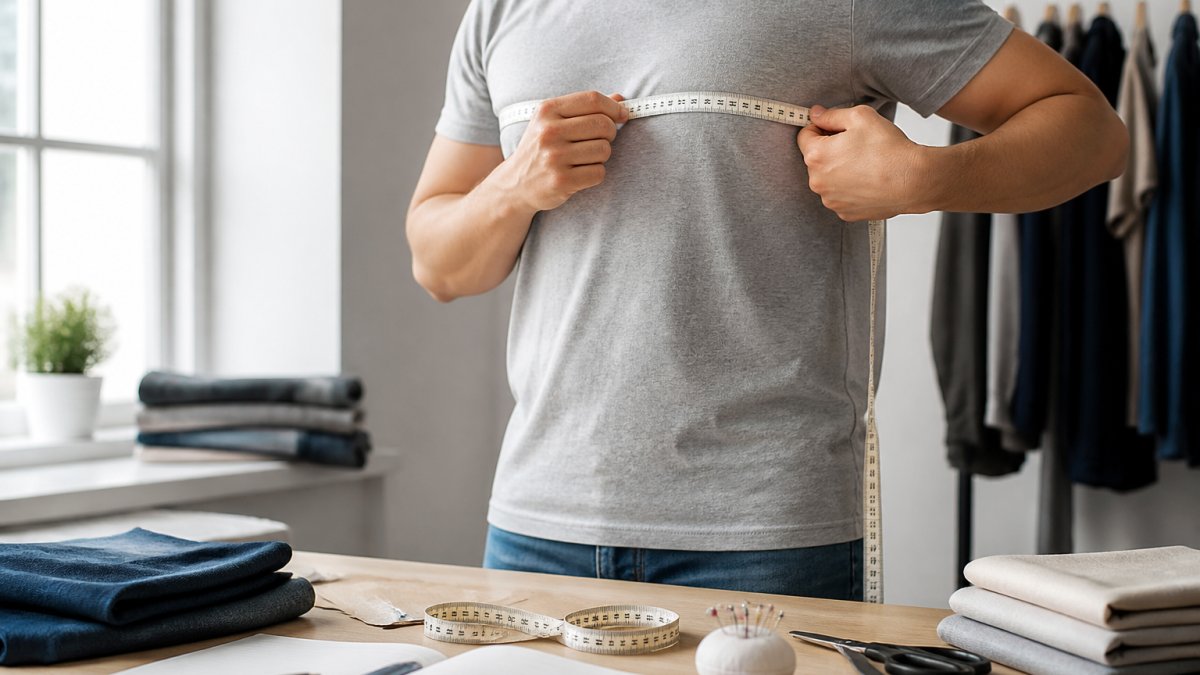
Start with chest circumference, the most critical measurement for shirt fit. According to Baymard Institute's sizing best practices, providing measurements in both units and considering human-model measurements significantly improves fit prediction accuracy.
Shoulder width comes next. Measure from the outer edge of one shoulder bone to the outer edge of the other.
Finally, measure your total torso length from the base of your neck down to your hip bone. This determines whether a shirt will hit at the right length for your proportions.
Using a Unisex Size Chart to Find Your Fit
A unisex size chart translates your body measurements into a specific size recommendation.
To use a chart effectively, find the row where your measurements fall closest to the listed garment dimensions.
Here's where fit consistency matters: not every measurement will fall perfectly into one size. If your chest fits Medium but your sleeve length suggests Large, you're in a common situation.
The National Library of Medicine's research on clothing-size prediction models evaluated machine learning approaches to sizing, underscoring that standardized sizing methodology remains a challenge across the industry.
| Measurement | How to Take It | Why It Matters |
|---|---|---|
| Chest circumference | Wrap tape around fullest part of chest | Determines overall fit and comfort |
| Shoulder width | Outer bone to outer bone | Ensures seams sit correctly |
| Sleeve length | Neck center to wrist bone | Prevents bunching or shortness |
| Torso length | Neck base to hip bone | Controls shirt length and proportions |
When you examine a unisex size chart, look for a chart that includes both inches and centimeters.
[Link to our detailed measuring guide: how to measure shirt size accurately]
Women's to Unisex Shirt Size Conversion
Converting from women's sizing to unisex requires understanding the structural differences between the two systems. Women's sizes typically feature narrower shoulders, a defined waist, and shorter overall length. Unisex sizing removes these assumptions, creating a straighter silhouette with more generous proportions overall.
Most women's sizes convert to unisex by sizing up one to two sizes. A women's Medium often corresponds to a unisex Small or Medium, depending on the brand. However, this is a starting point, not a rule.
If you wear women's Small, try unisex XS or Small first. If you wear women's Medium, start with unisex Small or Medium. If you wear women's Large, unisex Medium or Large is typically the right range.
The reason conversion varies: women's sizing is highly standardized around a specific body shape, whereas unisex sizing varies more widely between manufacturers. One brand's unisex Medium might fit like another brand's unisex Small.
Unisex Sweatshirt Sizing and Fit Considerations
Sweatshirt sizing follows similar principles to t-shirt sizing but with important differences. Sweatshirts typically run slightly smaller than t-shirts due to their heavier fabric and construction.
Sweatshirt fit also accounts for layering. Most people wear sweatshirts over other clothing, so the relaxed fit needs to accommodate an undershirt without feeling baggy.
Our Unisex Premium Sweatshirt features a classic crew neck with tightly knit 3-end fleece construction, designed for both solo wear and layering. The fabric weight of 8.5 oz/yd² provides substantial warmth without excessive bulk.

When measuring for a sweatshirt, use the same four measurements as you would for a t-shirt, but also consider how you plan to wear it. If you'll layer it frequently, you might prefer a slightly roomier fit. If you'll wear it solo, a more tailored fit might feel better. The relaxed silhouette of unisex sweatshirts accommodates both preferences well.
Built by Faith Not Fear — Unisex T-Shirt →
Check whether the sweatshirt has side-seamed construction, as this affects fit consistency. Side seams run vertically along your torso and help maintain shape through wear and washing.
Best Unisex Sizing Tips for Different Body Types
Unisex sizing works best when you understand how different body types interact with the relaxed fit.
For people with broader shoulders relative to their hips, unisex sizing provides the relaxed fit that men's sizing would offer, but with better overall proportions.
For people with curvier body types, particularly those with more pronounced chest or hip definition, unisex sizing offers room without assuming a specific waist definition.
For taller individuals, torso length becomes the limiting factor. Standard unisex sizing may leave your shirt riding up at the back.
For shorter individuals, the opposite challenge emerges: unisex shirts may hang too long.
Fabric Shrinkage and Care Impact on Unisex Sizing
Fabric shrinkage directly affects how unisex apparel fits after the first wash, making care instructions critical to your sizing decision.
Our unisex t-shirts feature 100% combed and ring-spun cotton (with polyester in heather colors) that is pre-shrunk to minimize this effect.
Sweatshirts, with their heavier fleece construction, experience different shrinkage patterns than t-shirts. The outer cotton face may shrink differently than the polyester blend of the fleece interior.
Learn how to prevent unisex shirts from shrinking with proper care techniques that preserve fit through repeated wear and washing.
High heat is the primary culprit in unisex apparel shrinkage. Machine drying on high heat can shrink a pre-shrunk garment by an additional 2-3%.
When sizing unisex apparel, factor in potential shrinkage of 3-5%.
Conclusion
Finding the right fit in unisex apparel comes down to four fundamentals: understanding how unisex sizing differs from men's or women's sizing, taking accurate body measurements, consulting the specific brand's size chart, and accounting for fabric shrinkage. Sizing fragmentation across the apparel industry creates genuine challenges, but these steps eliminate most guesswork.
The unisex clothing market is projected to grow from USD 17.72 billion in 2026 to USD 113.35 billion by 2035, according to Business Research Insights, reflecting growing demand for inclusive, comfortable apparel that prioritizes fit over gender assumptions. As this market expands, sizing consistency becomes increasingly important.
At Molina Faith and Friends, we're committed to delivering unisex apparel that fits well across diverse body types. When you apply these unisex sizing tips to our size charts, you'll find pieces that feel as good as they look.

Frequently Asked Questions
How do I know what size I am in a unisex shirt?
Start by taking your chest, shoulder, and sleeve measurements with a soft tape measure. Compare these measurements directly to the unisex size chart provided by the brand. Unisex sizing tips emphasize measuring across the fullest part of your chest, from shoulder bone to shoulder bone, and from your shoulder to your wrist. Most unisex shirts prioritize chest circumference as the primary sizing indicator, so if your chest measurement falls between two sizes, choose the larger one for a comfortable, relaxed fit.
Should I size up or down for a unisex sweatshirt?
Unisex sweatshirt sizing often runs smaller than t-shirts due to heavier fabric and construction. Many brands recommend ordering one size larger than your usual size for the perfect fit. However, always check the specific product's size guide first. If you prefer a tailored fit, size to your true measurements; if you want a relaxed silhouette, size up. Pre-shrunk fabric helps maintain consistency, but some shrinkage may still occur, so sizing up provides a safety margin.
How do I convert my women's shirt size to unisex sizing?
Women's to unisex shirt size conversion depends on fit preference and body measurements. A women's medium typically converts to a unisex small or medium, while a women's large often converts to a unisex medium or large. Rather than relying on a simple conversion rule, measure your chest, shoulder width, and sleeve length, then compare directly to the unisex size chart. This approach accounts for individual variation and ensures a better fit than size conversion alone.
What measurements should I compare when using a unisex size chart?
Focus on three key measurements: chest circumference (the most important for sizing), shoulder width (affects how the garment sits on your frame), and sleeve length (critical for arm comfort). Measure your chest at the fullest point while wearing a light layer, measure shoulder width from bone to bone across the back, and measure sleeve length from your shoulder bone to your wrist. Compare all three to the unisex size chart provided by the brand to identify the best size match for your body type.
Do unisex shirts usually run large?
Unisex shirts vary by brand and style. Some run true to size with a relaxed fit, while others may feel slightly oversized. T-shirts with lighter fabric weight tend to fit closer to standard sizing, while heavier pieces like sweatshirts often run small. Pre-shrunk fabric helps maintain consistency after washing. Always check the product's specific size guide and customer reviews, which often mention whether a particular shirt runs large, small, or true to size.
How should a unisex T-shirt fit on my body?
A well-fitting unisex t-shirt should have about 5-10 centimetres of ease at the chest for comfort without excess fabric. The shoulder seams should sit at or just beyond your shoulder bone, the sleeve should reach mid-bicep, and the hem should fall at hip level. The garment should allow movement without pulling across the chest or shoulders. If you prefer a relaxed fit, choose a size up; for a more tailored look, size to your true measurements. Fabric weight and construction affect how the fit appears on different body types.
Why does sizing data fragmentation make unisex apparel returns so high?
Sizing-data fragmentation drives up to 70% of apparel returns because inconsistent size charts across brands and lack of standardized sizing guidance leave customers confused about what size actually fits them. When unisex sizing tips vary widely between retailers, customers struggle to make confident choices online. Accurate body measurements and detailed size charts reduce this uncertainty. Brands that provide clear measuring instructions, realistic garment dimensions, and visual fit guides help customers choose correctly the first time.
Should I worry about shrinkage when ordering unisex apparel?
Pre-shrunk fabric reduces shrinkage significantly, but some fabrics may still shrink slightly after washing. Unisex sizing tips recommend accounting for potential shrinkage by sizing slightly larger if you prefer a relaxed fit, or choosing a size that fits perfectly with the understanding that it may shrink a bit. Always follow the care instructions provided with your garment. High-quality cotton blends with proper pre-shrinking minimize this concern, making sizing more predictable across multiple washes.
